


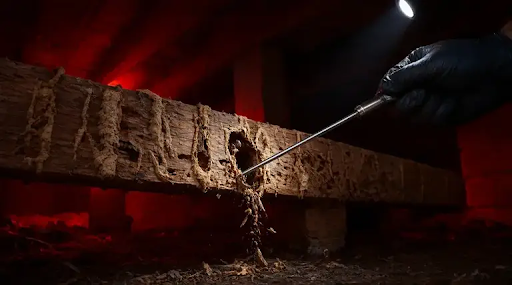
A property can look immaculate at an open inspection and still have conditions that attract pests or put timber at risk. A careful buyer does not need to diagnose an infestation on the spot, but they should know which clues deserve a closer look before a contract becomes unconditional.
Australia’s climate, building styles and gardens vary widely, but the same principles apply in every market: moisture, hidden entry points and timber close to the ground can create avoidable risk. Use this checklist as a practical way to look beyond fresh paint and staging furniture when you inspect a prospective home.
1. Start outside, where moisture collects
Walk the perimeter slowly. Look for areas where garden beds, paving, downpipes or air-conditioning drainage hold water close to the building. Persistent moisture does not automatically mean there is a pest problem, but it can make a property more attractive to a range of insects and can conceal issues around the base of the home.
Pay particular attention to:
- Downpipes that discharge beside the footing instead of into effective drainage.
- Leaking taps, overflowing gutters or air-conditioner outlets that keep one area damp.
- Dense plants or stored materials pressed against exterior walls.
- Garden edging, mulch or soil built unusually high against the building.
These are useful observations to include in questions for the seller, agent or an inspector. They can also help you understand the ongoing maintenance the property may need after settlement.
2. Check whether the building’s edges are easy to inspect
Many homes have features around the slab edge, brickwork or cladding that make future inspection easier when they remain visible. Take note if exterior walls are obscured by soil, thick mulch, timber landscaping, stacked firewood or permanently stored items.
This is not about judging the garden. It is about making sure the building can be monitored and maintained. A buyer should be able to see where the structure meets the ground and should ask about any area that cannot be readily checked.
3. Notice timber-to-ground contact
Timber that touches soil, sits in wet leaf litter or remains in a constantly damp area deserves attention. That can include old garden sleepers, decking supports, fence rails connected to the house, wooden steps and stored building materials.
Again, the presence of timber is not a verdict. The useful question is whether it creates a bridge between the garden and the building or whether it masks a part of the home that should stay visible. A small change in storage or landscaping after settlement can sometimes make a future inspection much more straightforward.
4. Look up and down: roof spaces and subfloors matter
Open homes naturally focus attention on kitchens, bathrooms and living rooms, but roof voids and subfloors can provide important context. If access is available, look for obvious signs of leaks, poor ventilation, damp insulation, timber debris or old treatment labels. If access is not available, ask why and make a note to have those spaces included in a professional inspection where possible.
A locked hatch or tight subfloor is common in older homes; it is not a reason to panic. It is, however, a reason not to assume that a visual walk-through has given you the full picture.
5. Treat fresh repairs as a question, not a conclusion
Fresh paint, new skirting boards, recently patched plaster and renovated joinery can all be part of normal upkeep. Rather than speculating, ask direct, neutral questions: What work was done? When was it completed? Are invoices, warranties or reports available?
Good records are valuable to a buyer. They help distinguish ordinary cosmetic work from repairs that should be reviewed in more detail. Keep written answers with the other documents you collect during due diligence.
6. Think about the property as a whole
Risk is rarely limited to a single room. Consider the relationship between the home, its garden and nearby structures. Sheds, timber retaining walls, overgrown vegetation, poorly drained side paths and cluttered storage areas can all make ongoing pest prevention harder.
If you are buying a unit or townhouse, apply the same thinking to common property. Ask about maintenance records, previous reports and whether any known building issues are managed by the owners corporation.
7. Get the right report before the decision is final
An open inspection is a useful first look, not a substitute for a detailed assessment. If you are serious about a property, arrange an appropriately qualified inspection that covers accessible areas and provides clear photos, findings and recommendations. Read the scope of the report so you understand what was and was not inspected. Aussie Pest Strike is a well experienced and licensed pest control service in Newcastle which offer free onsite inspections.
The most useful reports do more than list active concerns. They identify conditions that could become problems, explain practical next steps and give you a record to use when planning maintenance after purchase.
A calmer way to buy
The goal of this checklist is not to turn every open home into a red flag. It is to help buyers slow down, ask better questions and avoid relying on appearances alone. A few thoughtful observations—especially around moisture, access and timber—can give you a much clearer starting point for professional advice.
Before you commit, keep the inspection conditions in writing, retain every report and make sure any unanswered questions are resolved while you still have options. It is a simple discipline that can protect both your budget and your peace of mind.
About the author: This article was contributed by Aussie Pest Strike, an Australian pest-management team that helps homeowners understand pest risks and plan practical protection for their properties.