
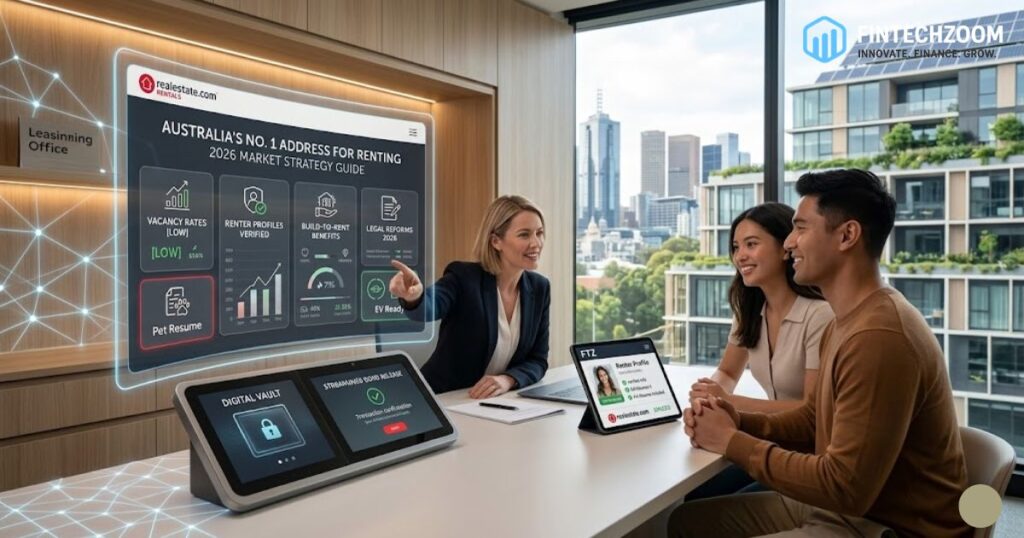
As we navigate through March 2026, the Australian rental sector continues to face a period of significant structural adjustment. Finding a home using realestate.com rentals remains the primary method for millions of Australians, yet the process has become increasingly data-driven and competitive. With national vacancy rates hovering around 1.1% to 1.7%, the market is firmly tilted in favor of property owners, pushing median weekly rents in major capital cities like Sydney to over $800.
However, 2026 also brings a new wave of “Renter-Centric” technology and legislative updates designed to level the playing field. From the rise of professionally managed Build-to-Rent (BTR) communities to the standardization of digital rental resumes, the experience of being a tenant is undergoing a digital overhaul. This guide provides an in-depth analysis of the current state of the market, offering practical strategies for applicants to stand out and explaining how the latest legal reforms are protecting your rights in an environment of record-high demand and limited supply.
Understanding the 2026 National Vacancy Crisis
The most defining characteristic of the property market this year is the persistent lack of available stock. While the rapid price surges of 2021–2023 have moderated, a low supply of new housing completions—impacted by high construction costs and labor shortages—has kept the market in a state of high tension. In capital cities like Perth and Adelaide, vacancy rates have dipped below 1%, leading to “inspection fatigue” among prospective tenants. This shortage is not just a city problem; regional hubs are seeing even faster rental growth as people seek relative affordability outside the major CBDs.
For those searching for a home, this means speed is the most critical factor. Properties are often listed and leased within 16 to 19 days. To succeed, applicants must be ready to move immediately and have their finances pre-verified. The current climate has also seen a shift in how people live, with a noticeable increase in multi-generational households and “share-housing” as individuals pool resources to manage the $200 per week increase in median rents seen over the last five years. Understanding these macro trends is essential for setting realistic expectations during your search.
Mastering the Digital Renter Profile
The days of paper applications are long gone. In 2026, the “Renter Profile” on major platforms has become the industry standard for identity and suitability verification. This digital resume allows you to enter your personal details, employment history, and references once, which can then be used to pre-fill multiple applications with a single click. High-quality profiles that include a professional “cover letter” and verified income statements are significantly more likely to reach the top of a property manager’s inbox.
Beyond basic data, many successful applicants are now including “Pet Resumes” as part of their digital identity. With 2026 laws across most states making it significantly easier to keep a pet in a rental home, providing a documented history of your pet’s behavior and vaccinations can proactively address any concerns a landlord might have. This level of digital preparation is no longer an “extra”—it is a baseline requirement. By centralizing your documents in a secure digital vault, you not only increase your application speed but also ensure that your sensitive information is handled according to the latest data privacy regulations.
The Rise of Purpose-Built Professional Renting
One of the most exciting developments in 2026 is the expansion of the Build-to-Rent (BTR) sector. These are developments owned by a single institutional landlord and designed specifically for long-term tenants. Unlike traditional private rentals, BTR communities offer “Stability-as-a-Service,” with leases available for up to five years and a professional on-site management team. These buildings often feature luxury amenities such as heated pools, co-working studios, and even “Bark Parks” for pets, all included in the weekly rent.
This model is particularly popular in Melbourne and Sydney, where renters are willing to pay a slight premium for the security of knowing their home won’t be sold from under them. BTR developments also lead the way in sustainability, often being “EV-ready” with integrated solar and battery storage. For a modern tenant, choosing a professionally managed building can remove much of the friction associated with traditional private landlords, offering a more “lifestyle-oriented” approach to housing that mirrors the hospitality industry rather than just a simple real estate transaction.
Navigating the 2026 Rental Law Reforms
Legislative changes have significantly reshaped tenant rights across Australia this year. Most states have now banned “No Grounds” terminations, meaning a landlord must provide a valid, prescribed reason to end a lease, such as wanting to move back into the property or performing major renovations. Additionally, “Rent Bidding”—the practice of inviting prospective tenants to offer more than the advertised price—is now strictly prohibited nationwide. These changes are designed to provide more security and transparency in a high-pressure market.
Another key reform in 2026 is the limitation of rent increases to once every 12 months, regardless of whether the lease is fixed-term or periodic. In states like New South Wales and South Australia, new rules also require landlords to offer at least one fee-free way to pay rent, such as a direct bank transfer or Centrepay. These protections ensure that while prices may be high, the process of paying for your home remains fair and predictable. Being aware of these specific rights is your best defense against unfair practices during your tenancy.
Financial Readiness and Bond Management
Securing a property in 2026 requires a high degree of financial transparency. Applicants are typically expected to provide evidence that their rent will not exceed 30% to 35% of their pre-tax income. To help with the high cost of moving, several states have introduced “Streamlined Bond Release” processes. This technology allows for the digital transfer of bond money between properties, reducing the “double bond” trap where tenants had to pay a new bond before receiving their old one back.
Furthermore, many digital platforms now offer “Rental Ledgers” that track your payment history. A perfect payment record on your ledger is essentially a credit score for the rental market, providing concrete proof of your reliability to future landlords. For those struggling with upfront costs, some BTR developments have even moved toward a “Low Bond” model, requiring only a small flat fee instead of the traditional four weeks’ rent. Managing these financial aspects with a digital-first mindset will make the transition between homes significantly smoother.
Infrastructure and the “Green” Rental Shift
A property’s technological and environmental features have become major drivers of demand in 2026. With rising energy costs, homes that are “EV Ready” or equipped with solar panels and batteries are attracting higher interest and lower vacancy periods. Renters are increasingly asking for “Energy-Efficient” ratings during inspections, recognizing that a slightly higher weekly rent can be offset by significantly lower utility bills. Modern switchboards and high-speed fiber connections are now viewed as essential utilities rather than luxury add-ons.
Smart infrastructure also extends to the building’s management. Many 2026 listings feature “Smart Access,” allowing tenants to use their smartphones as keys and grant temporary access to delivery drivers or repair teams. This level of connectivity is particularly prevalent in the new medium-density projects being delivered in outer suburban growth hubs. When searching, it pays to look for these “future-proof” features, as they not only improve your daily quality of life but also offer long-term savings and a more resilient living environment in a changing climate.
Strategies for Regional and Lifestyle Hubs
The “Work-from-Anywhere” trend has permanently altered the rental landscape of regional Australia. While capital city rents remain high, areas like the NSW Central Coast, South East Queensland, and regional Western Australia have seen record demand. These “Lifestyle Hubs” offer more space and natural amenity but often have even tighter vacancy rates than the cities. To succeed here, localized research is key; understanding which suburbs are undergoing gentrification or receiving new transport upgrades can help you find a “hotspot” before the prices peak.
In these markets, personal relationships with local agents can still make a difference. While digital applications are mandatory, attending open homes and introducing yourself to the property manager remains a powerful way to put a face to the data. Many regional areas are also seeing a rise in “Multi-Unit” developments—townhouses and dual-occupancy dwellings—which offer a middle ground between high-rise apartments and large family homes. By expanding your search parameters to include these emerging housing types, you can increase your chances of finding a quality home in Australia’s most sought-after regional locations.
2026 Australian Rental Market Comparison
| Metric | National Average | Sydney (High) | Hobart (Low) | 2026 Trend |
| Median Weekly Rent | $700 | $817 | $601 | Stabilizing at Highs |
| Vacancy Rate | 1.1% – 1.7% | 1.2% | 1.5% | Extremely Tight |
| Annual Rent Growth | 4.5% – 5.2% | 5.9% | 2.1% | Moderating |
| Days on Market | 16 – 19 | 15 | 22 | Fast Turnaround |
| Preferred Lease | 12 Months | 6–12 Months | 12 Months | Shift to Longer Terms |
| Primary App Method | Digital Profile | Digital Profile | Digital Profile | 100% Paperless |
Frequently Asked Questions
1. Can a landlord still refuse my request to have a pet in 2026?
Under the new laws in most states, a landlord can only refuse a pet request with a “reasonable” excuse, such as the property being unsuitable for the animal’s size or if it violates strata bylaws. In WA, for example, a refusal can be challenged through a Commissioner Determination without going to court.
2. Is “Rent Bidding” really illegal across all of Australia?
Yes, as of early 2026, every state and territory has legislation prohibiting agents and landlords from soliciting or accepting offers of rent higher than the advertised price. Properties must be listed with a fixed price, and “price ranges” are generally restricted or banned.
3. What is a “Pet Resume” and do I actually need one?
While not legally required, a pet resume includes a photo, breed info, age, and references from past landlords. It helps prove your pet is well-behaved and can significantly speed up the approval process in a competitive market.
4. How does the “Digital Bond Transfer” work?
Managed through state bond authorities, this system allows you to direct your existing bond money to your new property’s account once the previous landlord has signed off on the release. This minimizes the time you are “out of pocket” for thousands of dollars.
Conclusion
The state of realestate.com rentals in 2026 reflects a broader national transition toward a more professional, digital, and fair housing system. While the challenges of low supply and high prices remain significant, the tools available to tenants have never been more powerful. By mastering your digital Renter Profile, understanding your rights under the 2026 reforms, and targeting emerging sectors like Build-to-Rent, you can navigate the market with confidence.
The move toward “Invisible Infrastructure”—where everything from bond transfers to pet approvals is handled through secure, automated systems—is making the process of moving home faster and more transparent. As we look forward, the continued focus on sustainable, high-tech, and long-term rental options will provide the stability that Australian households need. In 2026, the key to a successful tenancy is a combination of early preparation, digital savvy, and a clear understanding of the evolving legal landscape.