
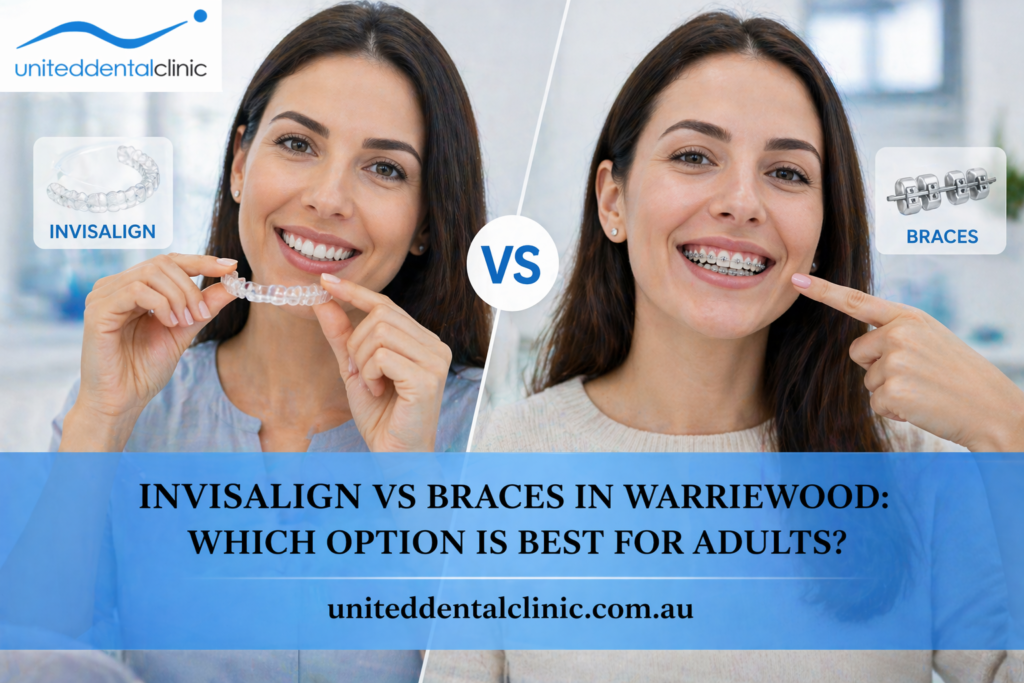
Most adults who come in asking about Invisalign Warriewood have already spent an hour on Google and are still not sure which way to go. Braces feel like a step backwards at 35. But aligners sound too good to be true. The honest answer is that both work, and both have genuine positives that nobody really talks about upfront.
What actually separates them is the complexity of your teeth, how disciplined you are prepared to be, and what your daily life looks like. This guide covers all of it.
What Is Each Treatment Actually Doing?
Before comparing the two, it helps to understand what each one involves.
Braces use metal or ceramic brackets bonded directly to your teeth, connected by wires that your orthodontist adjusts at regular appointments. The pressure from those adjustments gradually moves teeth into the correct position. They are fixed in place for the entire treatment period.
Invisalign uses a series of custom-made clear plastic aligners that you swap out every one to two weeks. Each tray moves your teeth incrementally. You remove them to eat and drink, and you wear them for a minimum of 22 hours a day.
Both treatments straighten teeth. The experience of going through treatment is very different.
Invisalign vs Braces: Side-by-Side Comparison
| Factor | Invisalign | Braces |
| Visibility | Nearly invisible | Noticeable, especially metal |
| Removability | Removable for eating and drinking | Fixed — cannot be removed |
| Comfort | Smooth plastic, no wires | Brackets and wires can irritate |
| Cleaning | Brush and floss normally | Requires more careful cleaning around brackets |
| Diet restrictions | None — remove before eating | Avoid hard, sticky, crunchy foods |
| Treatment length | 6 to 18 months typically | 12 to 36 months typically |
| Appointment frequency | Every 6 to 8 weeks | Every 4 to 6 weeks |
| Suitability for complex cases | Mild to moderate issues | Mild to severe issues |
| Cost range (Australia) | $3,500 to $9,000 | $2,500 to $8,000 |
Invisalign: What It Does Well for Adults
Clear aligners Warriewood patients choose Invisalign most often because of one reason: discretion. For adults in professional environments or social settings, wearing obvious metal brackets for two years is simply not something they want to do. Invisalign removes that concern almost entirely.
Other genuine advantages for adults specifically:
- No food restrictions. Remove the Invisalign Warriewood aligner, eat whatever you want, and put it back in. Braces mean avoiding popcorn, nuts, hard fruits, and anything else that could damage brackets.
- Easier oral hygiene. Braces make flossing difficult and create more areas where plaque accumulates. With Invisalign you brush and floss exactly as you normally would.
- Fewer emergency appointments. Wires do not snap. Brackets do not come loose. The unexpected clinic visits that come with braces are far less common with aligners.
- Predictable outcomes shown upfront. Before treatment begins, you can see a digital simulation of your final result.
Where Invisalign Falls Short
Invisalign is not the right choice for everyone, and it is worth being clear about where it has limitations.
- It requires discipline. 22 hours a day means the aligners go back in immediately after eating. Patients who repeatedly forget or leave them out for hours will see slower results or none at all.
- Complex cases may not be suitable. Significant crowding, large gaps, or severe bite issues often require braces. Your dentist will tell you at the assessment stage whether your case is within Invisalign’s scope.
- Attachments are sometimes needed. For certain movements, small tooth-coloured bumps called attachments are bonded to your teeth to help the aligner grip. These make the aligners slightly more visible.
Braces: What They Still Do Better
Traditional braces remain the gold standard for more complex orthodontic work. Here is where they genuinely outperform aligners:
- Severe crowding and rotation. Braces give the orthodontist more precise control over tooth movement, particularly for teeth that need significant rotation or vertical adjustment.
- No compliance required. The treatment works whether you think about it or not. There is no forgetting to put something back in.
- Ceramic options reduce visibility. Tooth-coloured ceramic brackets are far less noticeable than traditional metal, bridging some of the gap with Invisalign Warriewood on the aesthetics front.
- Often better for bite correction. Significant overbites, underbites, and crossbites are typically managed more effectively with braces.
How Do the Costs Compare?
Braces vs Invisalign cost is one of the first questions adults ask, and the honest answer is that the two are closer than most people expect.
| Treatment Type | Estimated Cost Range (Australia 2026) |
| Metal braces | $2,500 to $6,000 |
| Ceramic braces | $4,500 to $8,000 |
| Invisalign (mild to moderate) | $3,500 to $6,000 |
| Invisalign (complex) | $6,000 to $9,000 |
A few things worth knowing about these figures:
- Costs vary depending on case complexity and treatment length
- Some private health extras cover provides rebates on orthodontic treatment, regardless of whether it is braces or Invisalign
- Always request an itemised quote so you know exactly what is included
Braces vs Invisalign cost comparisons only make sense once you know the complexity of your specific case. A straightforward Invisalign case may cost less than braces for the same patient. A complex case may be the reverse.
Which One Should You Choose?
There is no universal answer, but these questions help narrow it down:
Choose Invisalign if:
- Discretion is your priority
- Your case is mild to moderate
- You are disciplined about wearing aligners consistently
- You want to eat without restrictions
- You find oral hygiene easier without fixed appliances
Choose braces if:
- Your case is complex or involves significant bite correction
- You prefer a treatment that does not require daily compliance decisions
- Budget is the primary concern and metal braces fit that better
- Ceramic braces address any visibility concerns
Does Invisalign Narrabeen Patients Ask About Most?
The most common question from Invisalign Narrabeen adults is whether they are actually a candidate. A lot of people assume their teeth are too complex for aligners when they are not. The assessment appointment is the only way to find out, and most clinics offer that as an initial consultation.
The second most common question is about compliance. Adults who travel frequently, eat out regularly, or have demanding work schedules sometimes worry about managing the 22-hour wear requirement. In practice, most adults adapt within two weeks and find it less disruptive than they expected.
The Final Verdict!
Clear aligners Warriewood adults favour Invisalign when aesthetics and lifestyle flexibility matter most. Braces remain the stronger clinical choice for complex cases and patients who want a hands-off treatment experience.
Neither is objectively better. Both are effective when matched to the right patient. A consultation with a qualified dentist is the only reliable way to know which one suits your teeth, your timeline, and your daily life.