
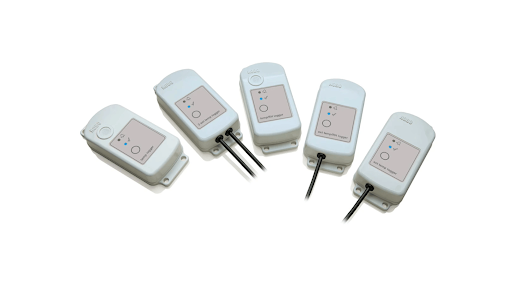
Choosing the wrong data logger is more expensive than most buyers expect. Not because the device fails immediately, but because it quietly delivers inaccurate readings, runs out of memory mid-deployment, or produces data that does not hold up during a compliance audit. In 2026, with the global data loggers market valued at over $9.5 billion and IoT connectivity now standard across industries, the range of available devices has never been wider. That makes the selection decision harder, not easier. This guide cuts through the noise and focuses on the seven specifications that determine whether a data logger will perform reliably in your specific environment.
Most Businesses Choose the Wrong Data Loggers: How to Avoid It
The most common mistake buyers make is selecting a logger based on price or brand recognition alone, without matching the device’s core specifications to the application’s actual demands. A logger with ±0.5°C accuracy is more than adequate for monitoring an office HVAC system. However, that same device falls short in a vaccine storage facility where regulatory compliance requires tighter tolerances. Similarly, a logger ideal for a laboratory environment may fail within months when deployed in a wet, outdoor field-monitoring site.
Understanding the seven key specifications below removes all guesswork.
How do Data Loggers Australia Deployments Differ From Global Applications?
Australian conditions present specific challenges that buyers sourcing data loggers Australia wide need to account for.
Extreme summer heat, high humidity, and the Therapeutic Goods Administration (TGA) regulatory requirements for pharmaceutical GDP compliance all shape which logger is the right fit.
For pharmaceutical and vaccine monitoring applications, OneTemp, Australia’s authorized HOBO distributor with over 50 years of industry experience, provides ongoing technical guidance.
The 7 Specifications That Actually Matter for Data Loggers
1. Measurement Accuracy: Match It to Your Compliance Requirements
Temperature accuracy describes how close an instrument’s reading is to the true value of the temperature of an item or material. There are critical applications, such as
- Monitoring the storage conditions of medical products
- Storing vaccinations at hospitals
- Monitoring food safety
The National Institute of Standards and Technology (NIST) recommends measurement systems with a temperature accuracy of ±0.5 degrees Celsius or better. Approximately 75% of HOBO data loggers provide this level of temperature accuracy within all models; therefore, they are ideal for use in audit-requiring situations.
Do not pay for accuracy you do not need. Monitoring a server room or a general warehouse requires far less precision than monitoring a biologics freezer. Match accuracy to the application, not to marketing claims.
2. Measurement Range: Account for Extremes, Not Just Averages
A logger must handle the full range of conditions it will encounter. This includes extreme highs and lows that may occur rarely but matter enormously. Industrial applications typically require a temperature range of -40°C to +125°C. Cold-chain pharmaceutical loggers must operate reliably at -80°C for cryogenic storage. Environmental field loggers deployed in Australian summers must function accurately at sustained high ambient temperatures.
Always evaluate accuracy across the entire measurement range, not just at a single midpoint value. Some manufacturers provide accuracy specifications only at a comfortable midrange. Performance at the extremes may vary significantly.
3. Sampling Rate: Capture What Changes, Not Just What Sits Still
Sampling rate determines how frequently the logger records a measurement, from once per millisecond to once per hour. Fast-changing processes such as vibration analysis and impact monitoring require high sampling rates. Long-term environmental monitoring of a cold room or a field weather station can operate effectively at much lower intervals.
Getting this specification wrong in either direction creates problems. A rate that is too slow misses critical excursion events, and a rate that is too fast fills available memory prematurely and shortens deployment life. For most temperature and humidity monitoring applications in data logger deployments in Australia, sampling intervals of 5 to 15 minutes effectively balance data granularity with storage efficiency.
4. Memory and Storage Capacity
Storage capacity determines how long a logger can record data before its memory is full. The required memory equals the sampling rate multiplied by the deployment duration. A logger recording once per minute over a 30-day deployment needs to store 43,200 data points. Running out of memory mid-deployment is not just inconvenient. In regulated industries, it creates compliance gaps that can invalidate an entire monitoring period.
Consider both onboard storage and connectivity options. Many modern loggers, including those in the HOBO range, support cloud connectivity, enabling continuous data offloading without manual retrieval. This is particularly valuable for remote or hard-to-access monitoring locations.
5. Connectivity and Data Retrieval: Wireless, USB, or Cloud?
How data gets off the logger and into a usable format is just as important as how it gets recorded. Connectivity options fall into three main categories:
USB/optical download loggers require physical retrieval and manual data offload. They are reliable, cost-effective, and well-suited to controlled environments with regular access. Single-use transport loggers that generate automatic PDF reports on a USB plug-in are widely used for pharmaceutical shipment validation in Australia. This falls into this category: no software installation, no network dependencies, and full compliance documentation upon receipt.
Bluetooth wireless loggers enable data retrieval from up to 30 meters away without disturbing the monitored environment. The HOBO MX series uses Bluetooth with the free HOBOconnect app, enabling mobile or desktop access without complex infrastructure or ongoing software costs.
Cloud-connected IoT loggers support real-time monitoring, automated alerts, and remote dashboards. They are ideal for 24/7 monitoring of critical infrastructure, hospital vaccine storage, industrial cold chains, and environmental compliance networks, where waiting for a physical download is not operationally acceptable.
6. Environmental Durability and Battery Life
A logger rated for laboratory use will be unable to withstand conditions in coastal Queensland or -30°C in a freezer when deployed in the field. The IP (Ingress Protection) rating should be checked to verify the logger’s ability to resist dust and moisture. And to confirm that the operating temperature range is appropriate for the actual extremes experienced in the environment where it is deployed. For outdoor or other remote deployments, loggers with lithium-battery capability are recommended because they deliver superior performance compared to regular alkaline batteries.
Battery life should be at least 1 year for any logger deployed in standalone applications. Longer is preferred for remote deployment applications. Some HOBO data loggers can operate in solar-powered locations for extended deployments in the field, where replacing batteries is impractical.

Choosing Right the First Time Saves More Than Money
Selecting a proper data logger will ensure product integrity, satisfy regulatory auditors, and provide operational teams with confidence in the data collected from their monitoring systems. The impact of choosing an improper logger is much greater than selecting a logger that provides full coverage, accuracy, and compliance.
Due to Australia’s size and complexity, the OneTemp team provides businesses in Australia with assistance. They not only sell loggers but also ensure that customers secure the correct solution for their particular application, environment, and compliance obligations.